
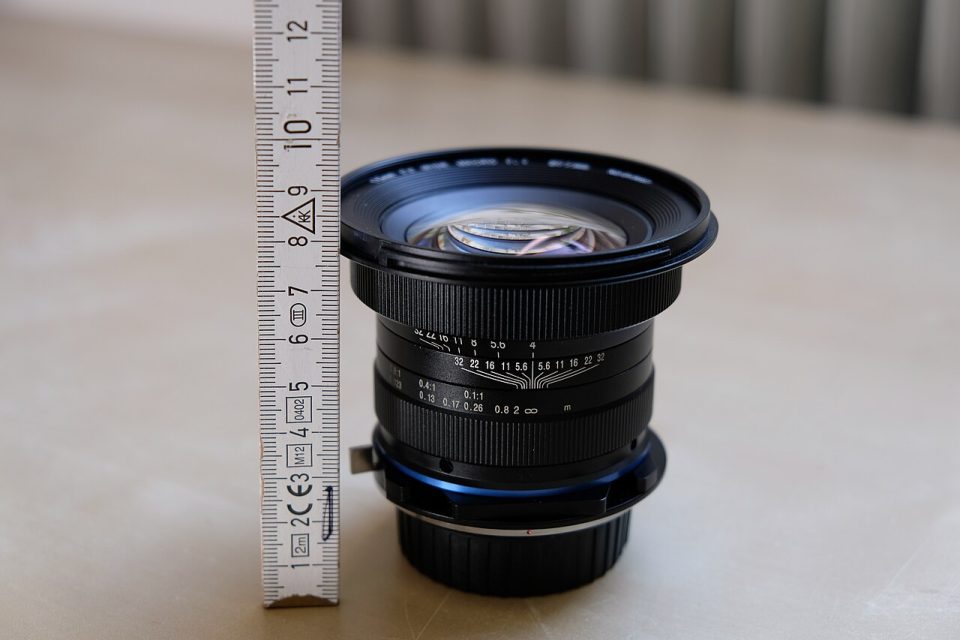
Wide-angle zooms test a lens maker’s honesty, because the specifications that sell these lenses rarely survive contact with the corners of the frame. Distortion, edge softness, and field curvature all live in the periphery, and a wide zoom that looks flawless in the center can fall apart exactly where landscapes and architecture depend on it most.Barrel distortion is the most visible flaw at the wide end, bending straight lines near the edges of the frame. Modern designs lean on software correction to fix this, but correction costs resolution and can introduce its own artifacts, so a lens with lower native distortion holds an advantage that a corrected profile cannot fully replace. Prime wide angles still beat zooms here, and the gap is widest at the extreme focal lengths.Edge sharpness follows a predictable curve across most wide zooms. The center sharpens by f/4, the mid-frame by f/5.6, and the extreme corners may not fully resolve until f/8, if they ever do.
Field curvature compounds the problem by shifting the plane of best focus, so a lens that looks soft in the corners may simply need refocusing,
Leave a Reply